
Marsan by Hélène Darroze
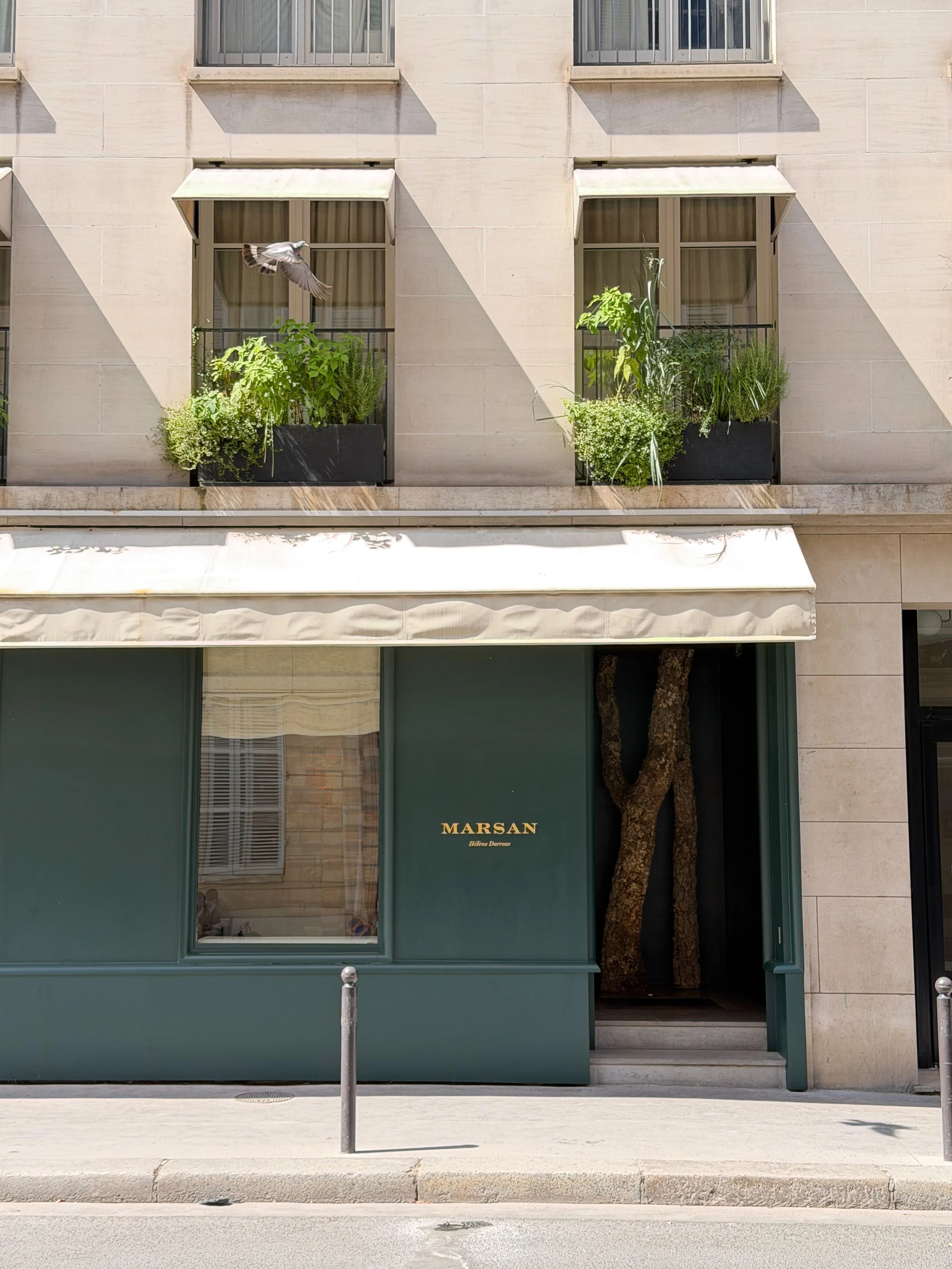
Entering Marsan on Paris’ Rive Gauche, you are first led past the private dining room, which doubles as the restaurant’s wine cellar. Floor-to-ceiling glass cabinets filled with bottles form the walls around a long wooden table, decorated simply with earthenware pots. Above it hangs a sculptural light that could just as easily belong in an exceptionally well-appointed Parisian townhouse.
From there, a wooden spiral staircase takes you up towards the kitchen and main dining room. The restaurant is designed to feel like a room in Hélène Darroze’s home and, based on this evidence, she has a very lovely home indeed. Wood panelling, rounded edges and layers of natural texture give the space an immediate softness. It is elegant and wonderfully calm.
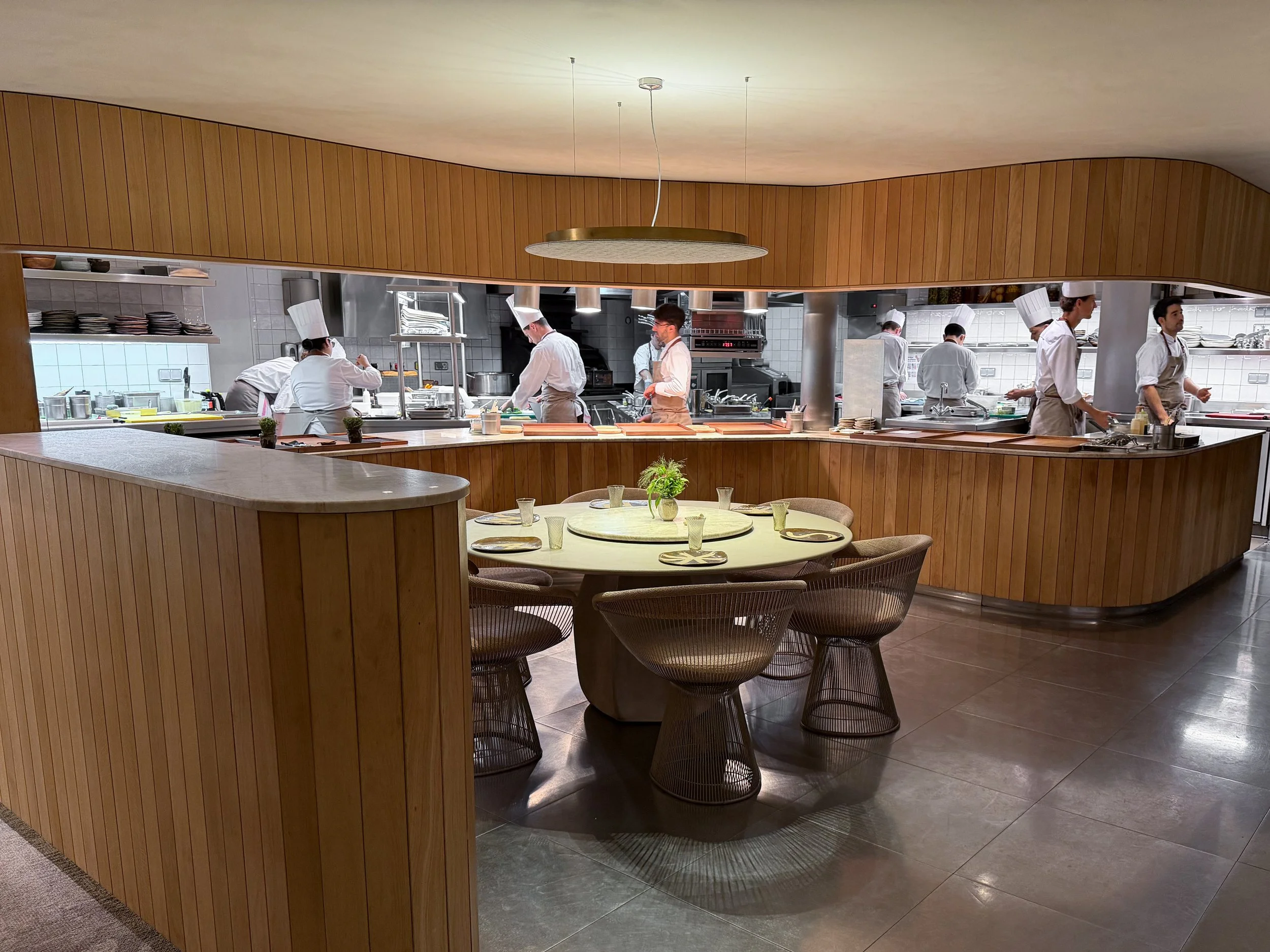
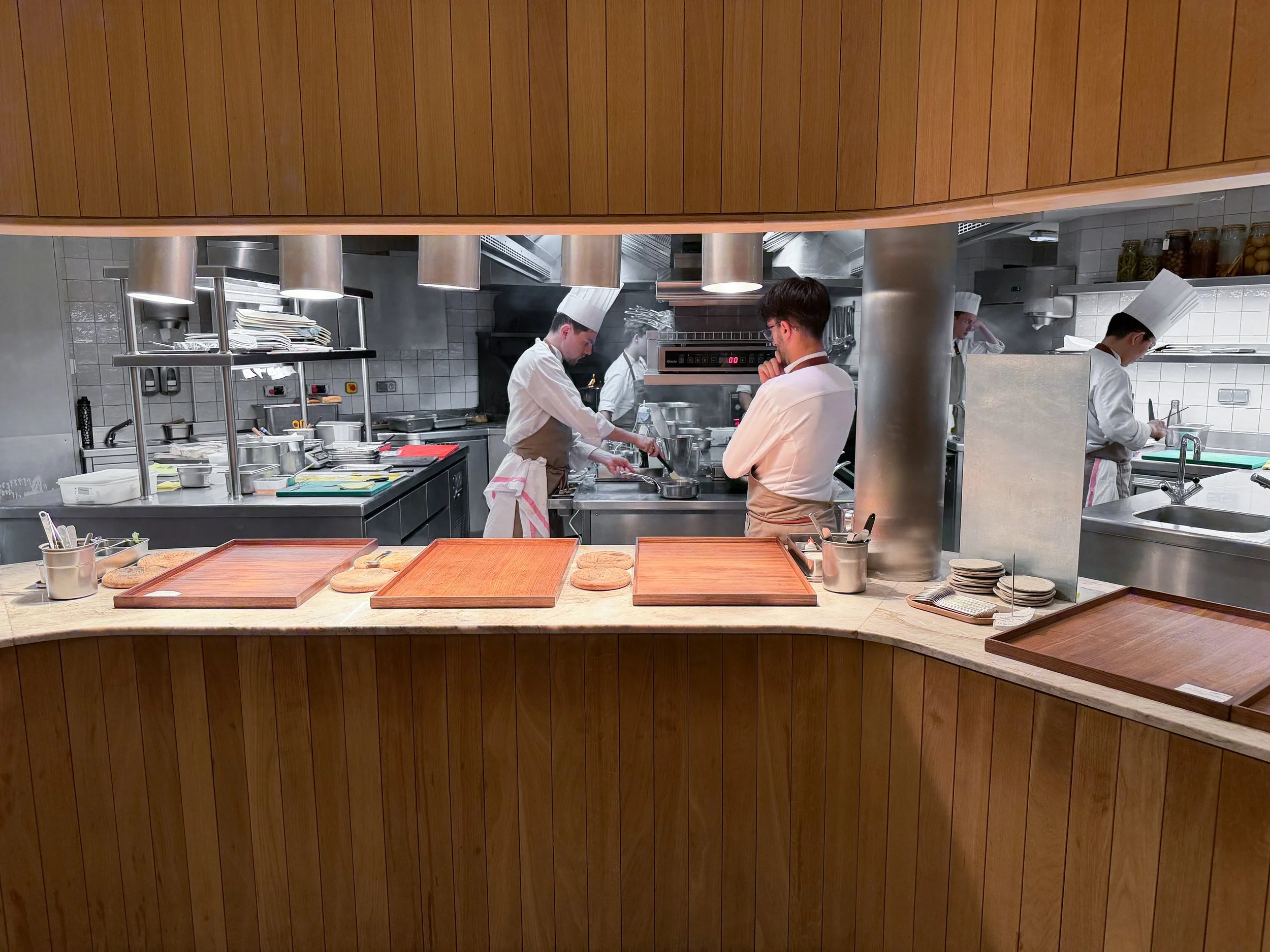
The open kitchen sits to the left, with a circular chef’s table positioned directly in front of it. The pass curves around the table, continuing the flowing lines used throughout the room, while the kitchen behind it appears almost improbably serene. To the right, a library wall holds fragments of Darroze’s personal and professional history: family photographs, objects collected over the years and a framed image of the original Darroze restaurant in the Landes. The details make the room feel immediately intimate and personal.
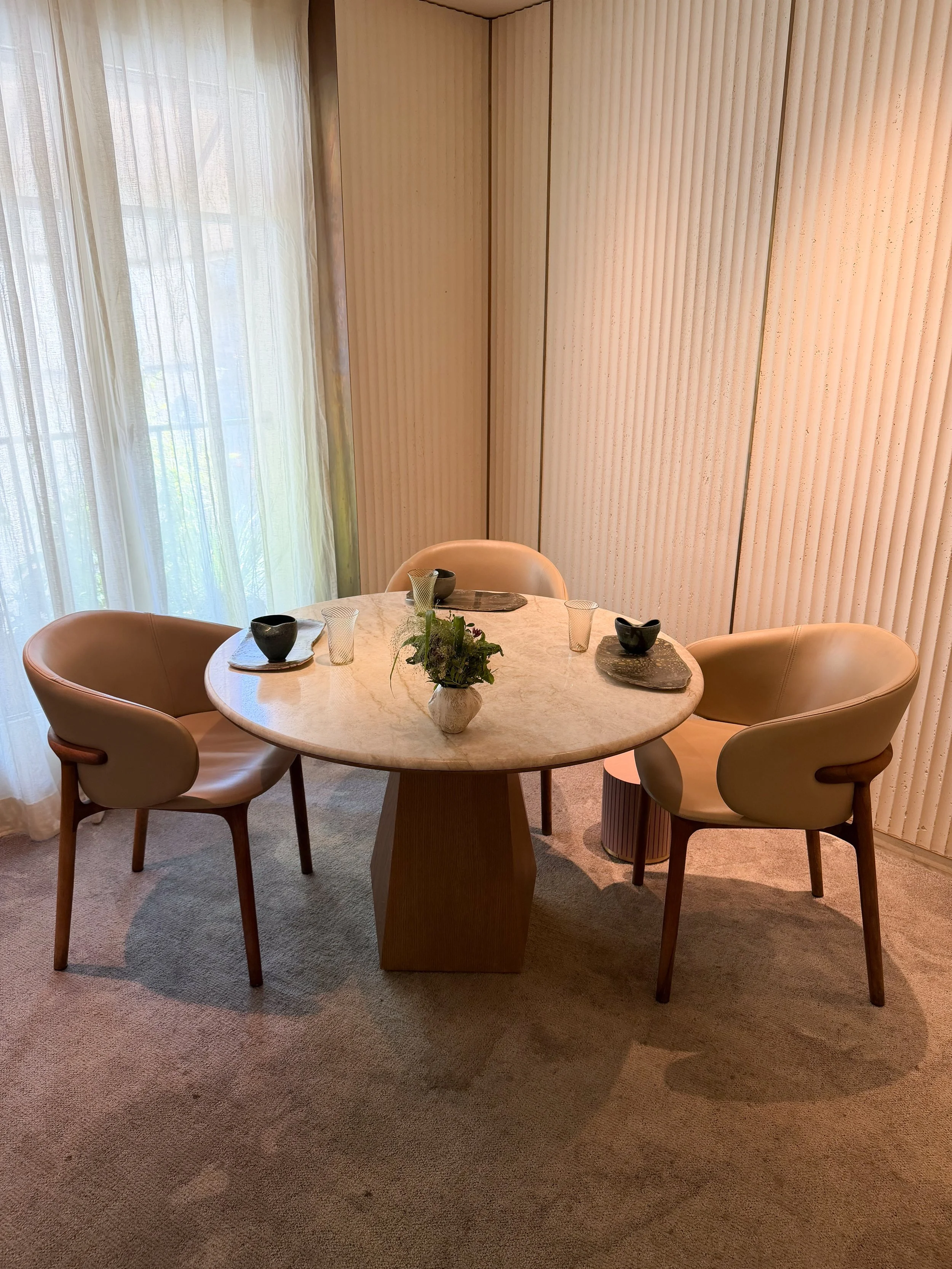
Further into the dining room, floor-to-ceiling windows are softened by voile curtains, filtering out the glare and movement of the Parisian street below while allowing the room to remain full of natural light. The wooden bookcase beside us was enveloped by the plaster around it, softening its edges and melting it into the wall. Marble tabletops, textured plaster, timber and leather continue the natural palette and sense of calm. I was torn between the lunch menu and a series of sun salutations.
Champagne arrived promptly, so I opted for lunch.
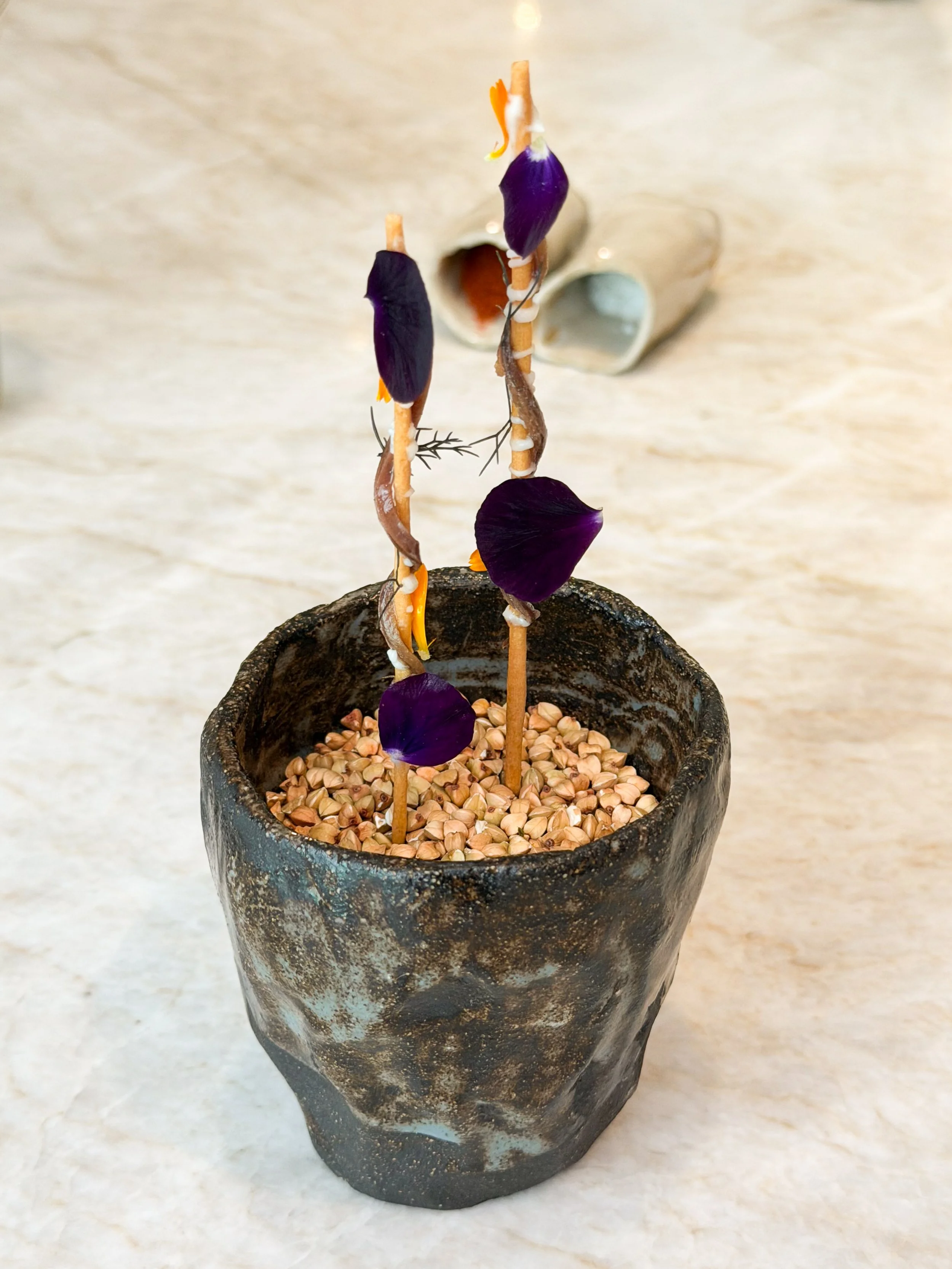
The menu began with a series of small bites that immediately set the tone. A fennel and lemon consommé was bright and clean, followed by a beautiful little anchovy breadstick that packed a surprisingly salty punch, and a bonito taco with Espelette pepper, finished with fresh thyme at the table. Each was precise without feeling overly fussy, and the hallmarks of Darroze’s style were beginning to emerge: freshness, restraint and very clear flavours.
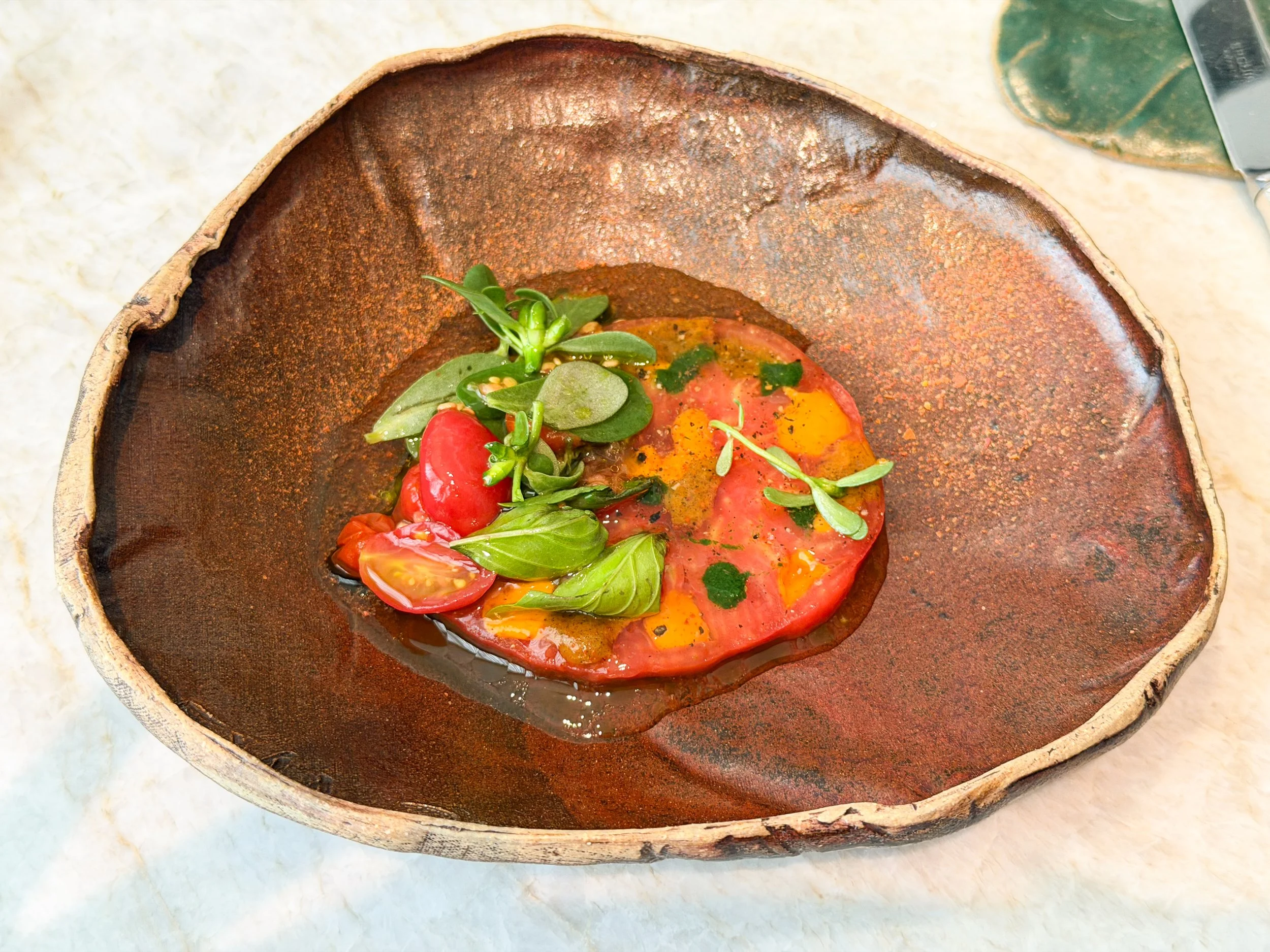
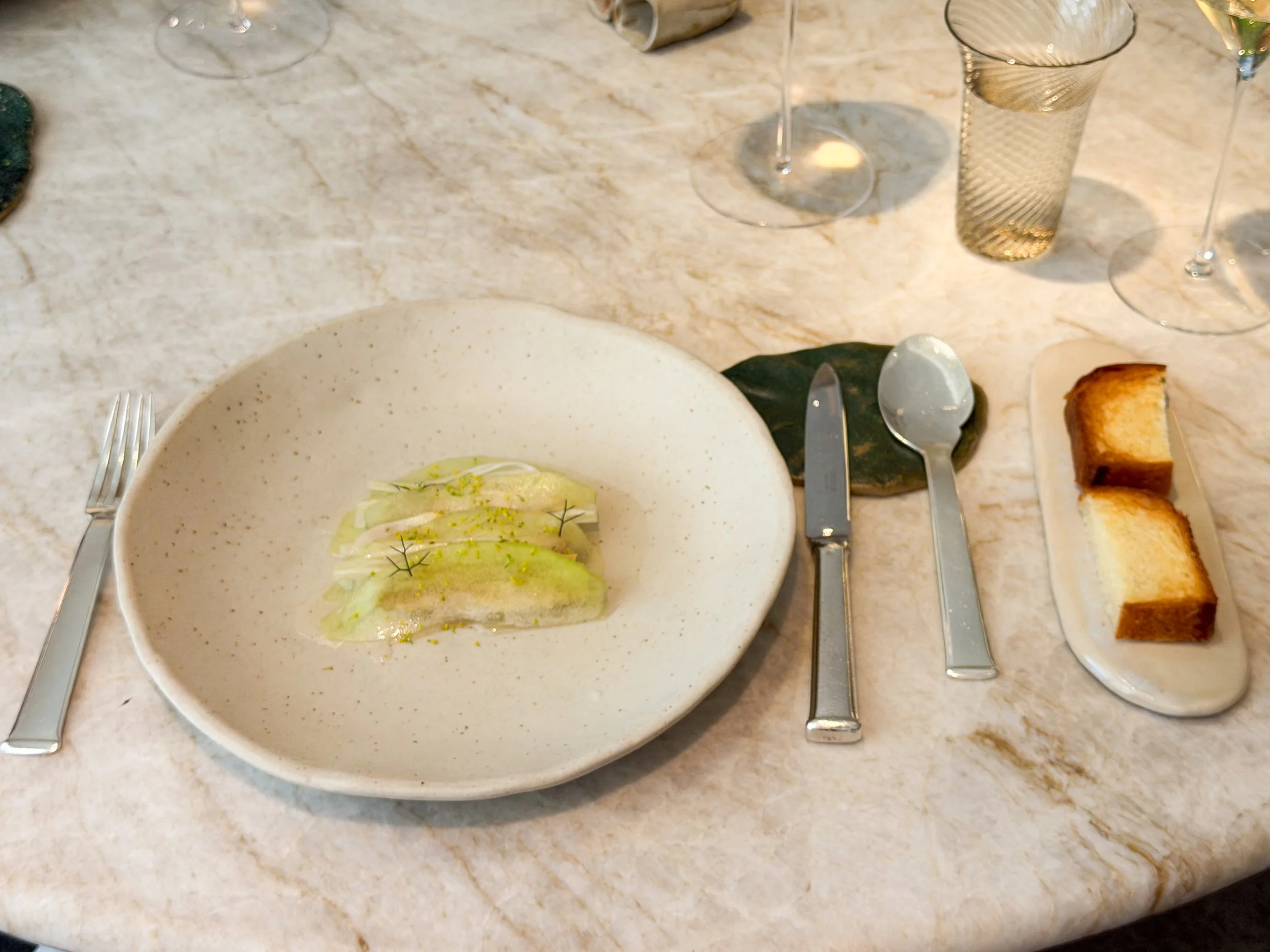
The first proper course of the tasting menu was the foie gras, made with liver from the Landes and served with pickled melon, fennel and Timut pepper. It was unlike any foie gras dish we had tasted before: remarkably light and creamy, with plenty of sharpness from the pickled fruit and fennel to balance the richness. The pairing felt beautifully judged too. It went straight onto Matt’s death row meal, which I have since discovered is an entire tasting menu. I do feel this is cheating slightly, but that is a debate for another day.
Bread and focaccia followed, along with Espelette pepper butter (they clearly love Espelette pepper here, which is A-OK with me) and a bowl of melted duck fat for dunking. An instruction I was very happy to follow. It was indulgent without being overpowering and made me ponder why we are not dunking things in duck fat more often.
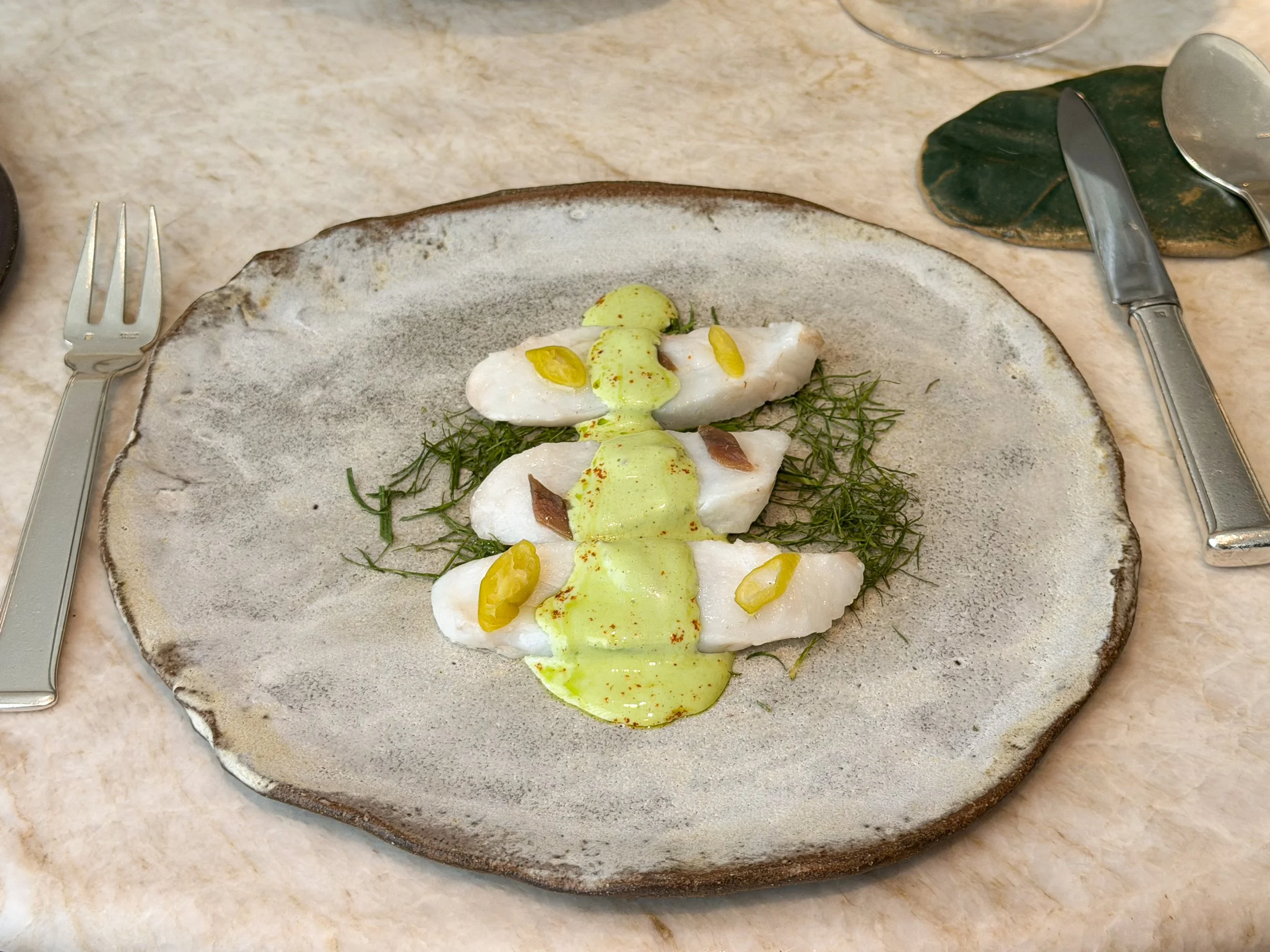
My pondering was halted at the next course, however, when the hake arrived, cooked in duck fat and served with a Koskera-style sauce, garnished with Cantabrian anchovies and guindillas, and served on lovage. The sauce was rich and creamy, and the anchovy and peppers gave it a nice salinity and lift. It was very polished, but the texture of the fish didn’t quite do it for me, and it didn’t feel as exciting as some of the other dishes.
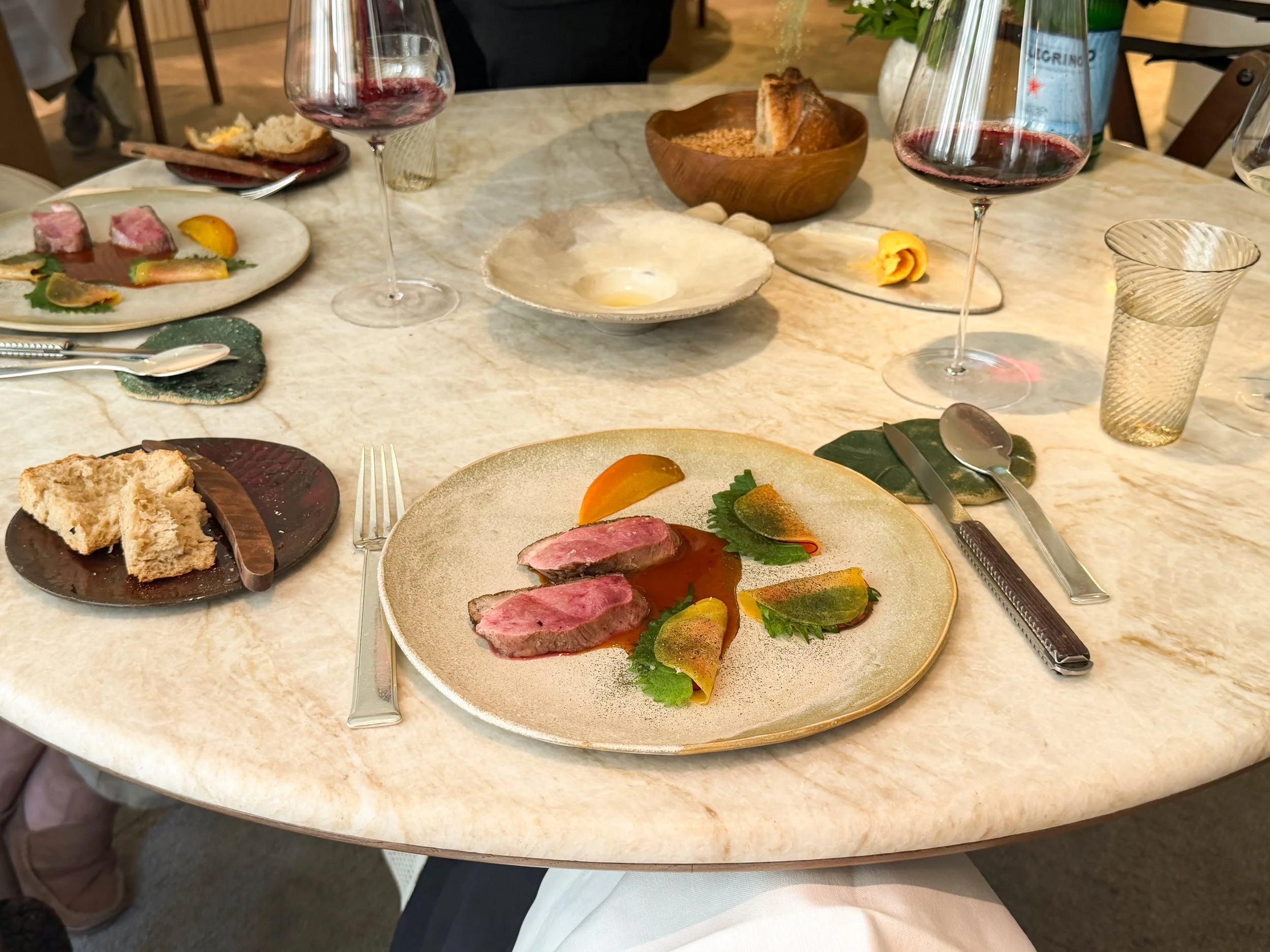
The next course, however, has stayed with me. Before it arrived, the team brought a glowing-hot flambadou to the table and explained its history in south-western French cooking. The traditional metal funnel with a long handle is filled with duck fat, which subsequently melts and is poured back over the meat as it cooks. The Rouen duck was served alongside little parcels of yellow beetroot, red plum, confit ginger and shiso leaf, with a mole-enriched duck consommé. Duck dishes on tasting menus can easily become heavy and predictable, but this was smoky, vivid and unusually fresh from the shiso. It tasted completely different to any other duck dish I have eaten.
The cheese course, a supplementary extra, continued the menu’s journey through Darroze’s native south-west of France. Our waiter carefully explained the cheeses displayed on the table in the centre of the room, with the selection leaning heavily towards sheep’s milk cheeses from the Basque region. Each cheese was laid out next to its complementary condiment on a plate shaped like an artist’s palette, and served with warm fig bread. It was the first time we’d had a specific condiment pairing for each cheese, and it was a really nice touch.
Dessert began with Marsan’s take on Black Forest gâteau. It is not a dessert I would typically list among my favourites, but Darroze’s signature lightness of touch took it to another level. The fresh cherries cut through the chocolate, the meringue added texture, and the whole thing felt far more elegant than the retro pudding it referenced. It was paired with ratafia, a sweet fortified wine made from grape juice and grape spirit, whose ripe fruit and caramel notes worked perfectly with the chocolate and cherries.
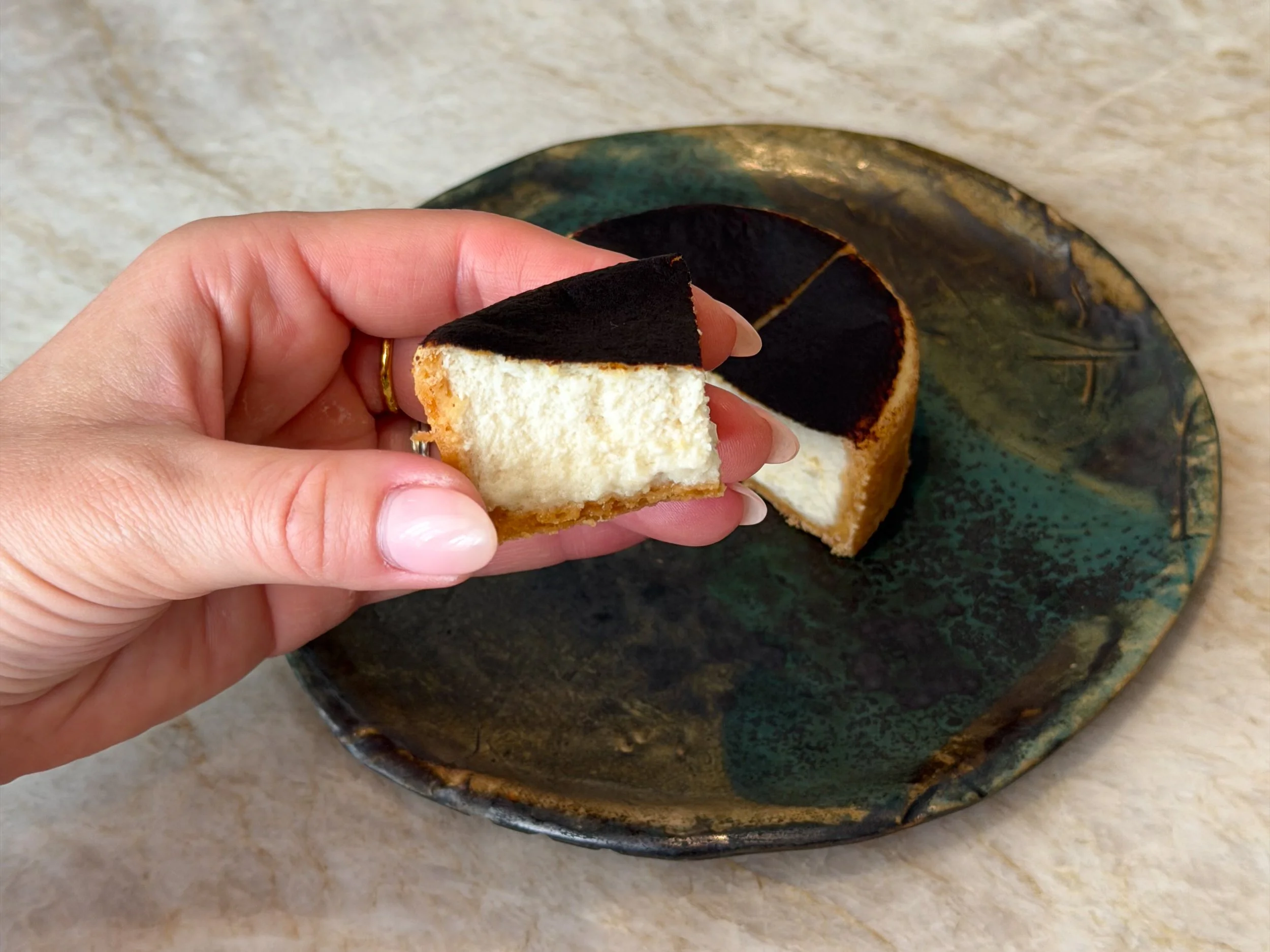
Then came bread ice cream with strawberry jam and olive oil, which, if it’s not too offensive to the chefs to declare, tasted exactly like eating a jam sandwich in ice cream form. A jam sandwich was a childhood staple of mine, so I do mean this with the greatest of compliments. A small cheesecake followed, creamy and elegant, with perfectly thin, crispy pastry, though perhaps a little less memorable.
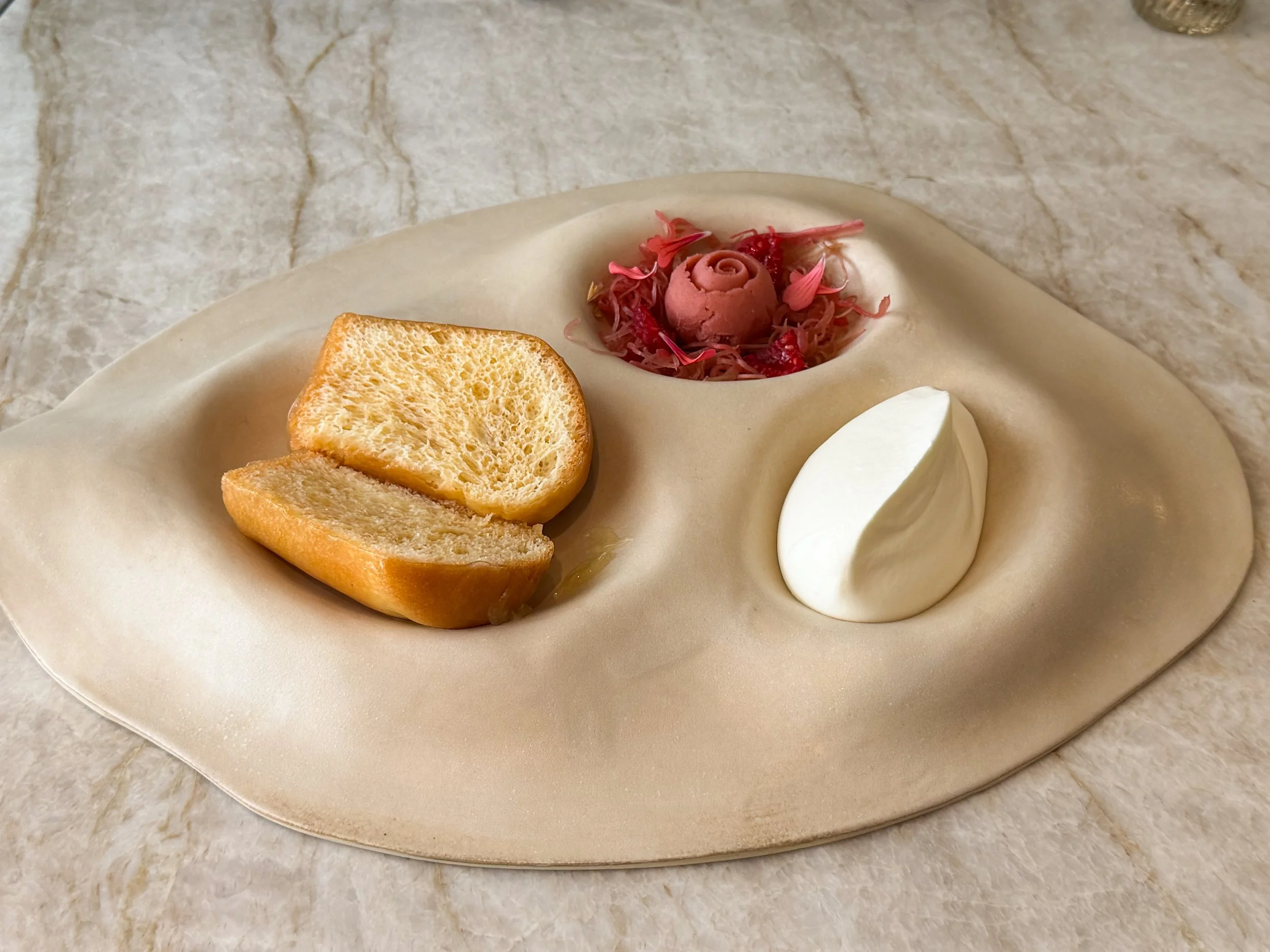
Much to my delight, a rum baba was the grand finale. The booziest member of the boozy-dessert category, and one of my all-time favourites for reasons we needn’t examine too closely. It was brought to the table with a choice of three aged Armagnacs from the Darroze family, produced by Hélène’s brother. We chose two different years, one for each half of the baba, and preferred the older one, with its deeper caramel and vanilla notes. The baba itself was exceptionally light, served with raspberries, rose jam and rose-geranium cream, and paired with a Jurançon dessert wine. It was fragrant, delicate and made walking noticeably more difficult.
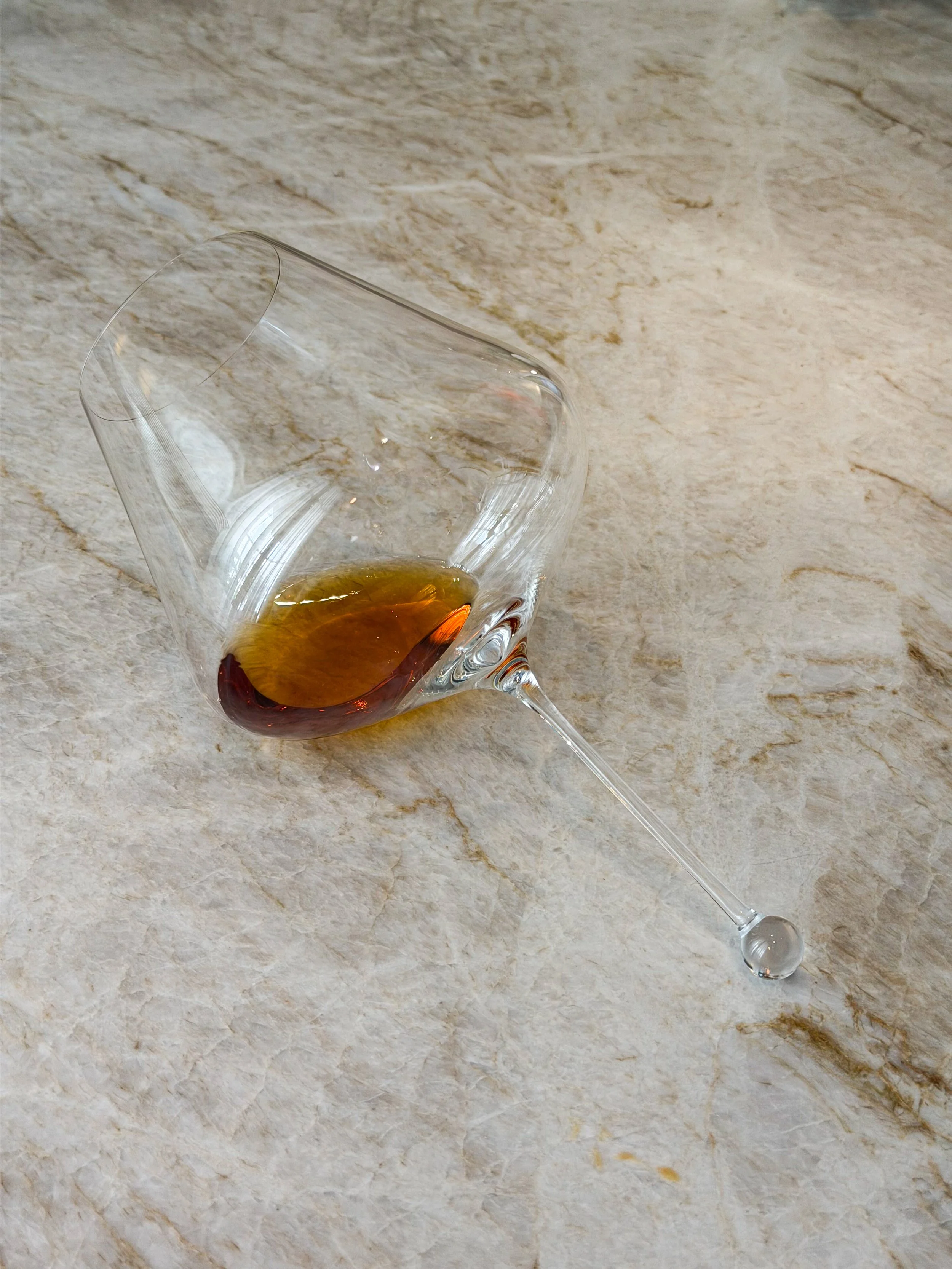
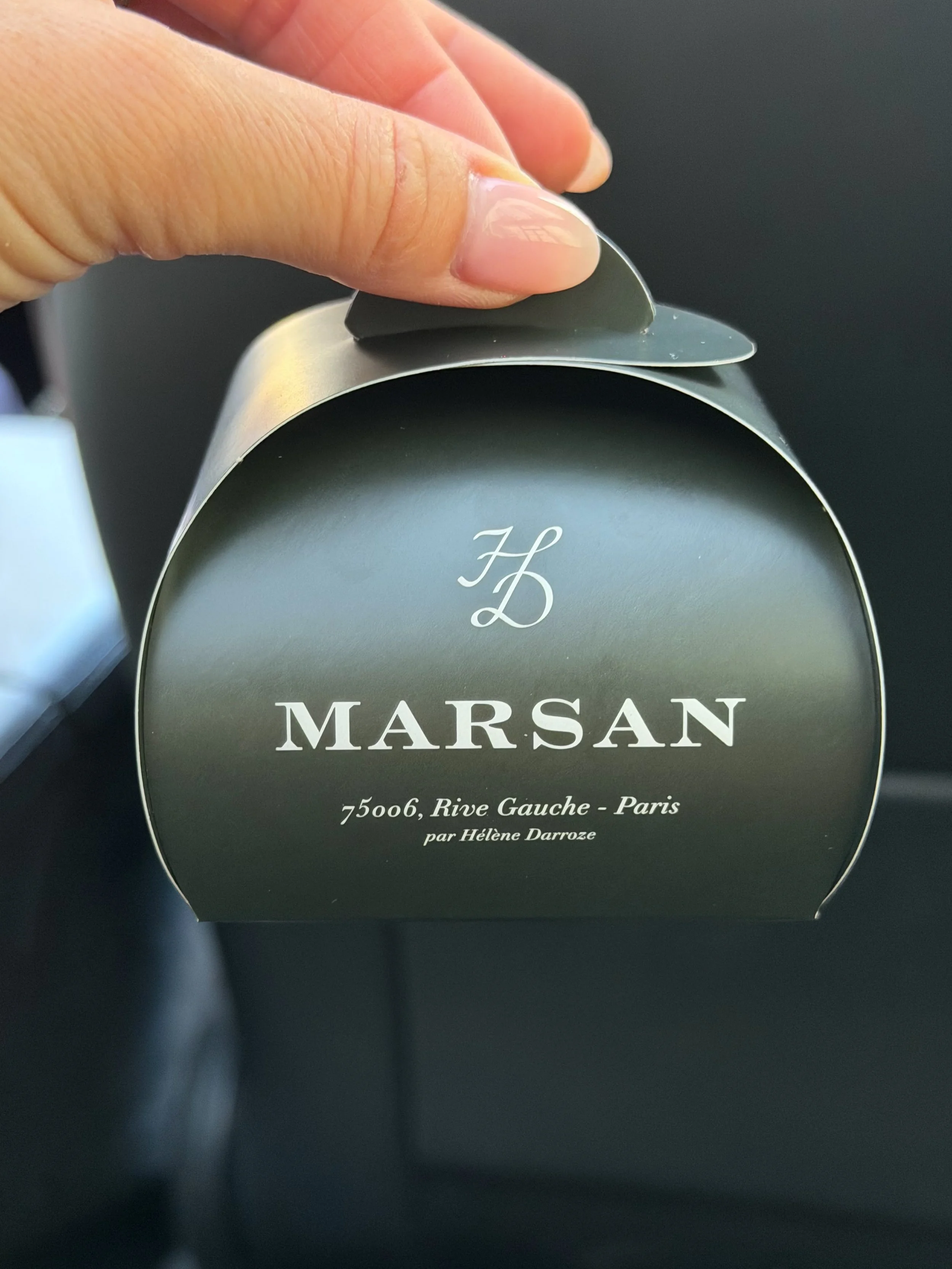
To close the menu, we were poured a glass of Armagnac in an iconic Pomponne glass. It’s a traditional French footless glass, with a ball in place of a stem, meaning it cannot normally be put down until you have finished. Dangerous. This slightly updated version did have a small flat edge, allowing it to be balanced on the counter between sips. More sensible. A chocolate-caramel truffle with popcorn notes arrived alongside it, plus a canelé tucked into a little box to take home, which was consumed after a lengthy siesta. Delightful.
The five-course menu we had is €225 (around £190), with the cheese course an additional €28 and the rum baba €18. We shared one of each between us, which was more than enough given the amount of food already involved. There is also a longer seven-course menu at €290 (around £250), with cheese still charged separately. The real value, however, is at lunch. From Tuesday to Friday, the five-course menu is available for €110, with a wine pairing for €75. For cooking of this standard at a two-Michelin-star restaurant in Paris, I think that’s unmissable.
Darroze is one of the most decorated and accomplished female chefs in the world, and Marsan is a testament to that. After nearly three decades in Paris, it feels settled into its own identity, but never like a restaurant trading on its reputation. It is clearly a deeply personal endeavour, and that is a large part of what makes it such a success.
The service throughout was faultless: warm and friendly, but completely in control. Nothing felt rushed, nothing lingered too long, and every course, wine and explanation arrived exactly when it should. It is the kind of precision you expect at this level, but crucially, it never tipped into stiffness.
The foie gras, Rouen duck and rum baba were the dishes that really stayed with me. Even the richer ingredients felt light and elegant, and there was a real sense of freshness running through the menu. The cheese course was also one of the most interesting I’ve had in a long time. Marsan feels very clear in its intention: to take the flavours, ingredients and traditions of Hélène Darroze’s south-western French roots and present them through a lighter, more refined lens. It absolutely succeeds in that endeavour.
*This visit was a PR invitation and was paid for by the restaurant, with no expectation of content or written reviews. All words and opinions are my own.